
Science
Curriculum Intent
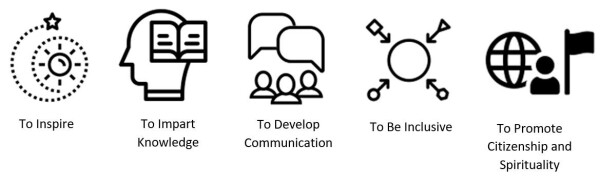
Inspire: Children think and act like scientists, asking questions and exploring real-world contexts.
Impart knowledge: Build strong understanding of substantive (biology, chemistry, physics, earth science) and disciplinary knowledge (working scientifically).
Develop communication: Enable children to explain, present, and discuss scientific ideas confidently.
Inclusivity: Ensure all learners, including SEND/EAL, access the full curriculum through scaffolding and pre-teaching.
Promote citizenship and spirituality: Connect science to real-life contexts, values, and global responsibility.
Curriculum Implementation
We have developed our own Science curriculum which aligns with the content and expectations of the National Curriculum. Children engage with a weekly Science lesson and each lesson recaps and then builds on the previous lesson so that knowledge can strengthen over time.
Through the science curriculum, pupils will develop an understanding of the following key concepts. These concepts are revisited through different units as pupils move through the school.
Biology
• Living things and their environment (Animals, humans, plants, habitats)
• Reproduction, inheritance and evolution (Evolution, inheritance, life processes, life cycles)
Chemistry
• States of matter (Solids, liquids, gases)
• Materials (properties and changes) (Reversible/irreversible changes, rocks, fossils)
Physics
• Energy (Light, sound, electricity)
• Forces (Friction, air resistance, gravity, magnets)
Earth Science
• Earth and space (Seasons, day and night, solar system and beyond)
Disciplinary Knowledge
The children also learn about the disciplinary elements of Science which includes:
Methods used to answer questions (use of models, classification, correlations and patterns, experimentation, fair testing)
Using apparatus and techniques (accurate measurement, collecting and recording data, carrying out procedures safely and accurately)
Data analysis (processing and presenting data, exploring relationships, communicating results in tables / graphs, identifying correlations)
Using evidence to develop explanations (using evidence / scientific knowledge to draw conclusions, explain laws, models, concepts and findings)
Curriculum Impact
Pupil voice and work evidence show strong engagement, enjoyment, and retention of learning. Students use subject-specific vocabulary confidently and produce high-quality, age-appropriate work. Children complete end of unit assessments that focus on the identified knowledge.