
Religion and World Views
Curriculum Intent
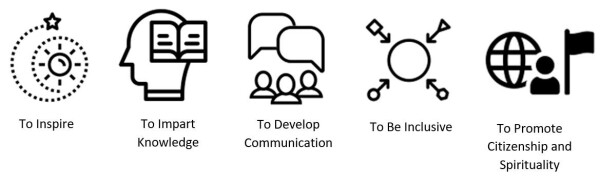
Inspire curiosity about diverse beliefs and cultures, creating a safe environment for children to ask questions and explore meaning.
Impart knowledge so pupils develop a well-rounded understanding of religious and non-religious worldviews, enabling them to form their own perspectives.
Develop communication by fostering respectful dialogue, empathy, and active listening during discussions about beliefs and values.
Be inclusive, ensuring all pupils access a high-quality curriculum that appreciates the diversity of religions and worldviews.
Promote citizenship and spirituality by encouraging reflection on life’s big questions, respect for diversity, and shared values such as fairness and responsibility.
Curriculum Implementation
At St Cecilia’s, the Religion and World Views curriculum is delivered in line with the local agreed syllabus and the Statement of Entitlement, ensuring that 50% of the content focuses on Christianity.
The curriculum is structured around three strands: substantive knowledge, disciplinary knowledge, and personal knowledge.
Substantive knowledge builds pupils’ factual understanding of beliefs, practices, morality, and community, while disciplinary knowledge develops skills through enquiry-based learning, encouraging pupils to think like scholars by asking questions, interpreting meaning, and evaluating claims. Personal knowledge enables pupils to reflect on their own perspectives and compare them with others.
Lessons follow a clear structure that includes recap and recall activities, explicit vocabulary teaching, an attention-grabbing introduction, a main event with teacher modelling and collaborative tasks, and a reflective wrap-up. The curriculum uses a spiral model, revisiting concepts with increasing depth and complexity across year groups. Adaptive teaching strategies, such as scaffolding and multi-sensory approaches, ensure inclusivity for all learners, including those with SEND.
Curriculum Impact
The Religion and World Views curriculum has a positive impact on pupils’ learning and personal development. Pupil voice demonstrates that children enjoy RE lessons, feel confident discussing different beliefs, and can recall their learning over time. Written work shows progression in understanding and respect for diverse worldviews, with opportunities for creative and reflective responses. The curriculum fosters empathy, tolerance, and critical thinking, equipping pupils to become thoughtful citizens who appreciate diversity. It also supports spiritual and moral development by encouraging reflection on life’s big questions and promoting shared values such as fairness and responsibility.
Withdrawal from religious education
Parents may withdraw their children from all or any part of religious education and teachers can exercise their right to withdraw from teaching the subject. However, we hope that all parents and teachers will feel comfortable with the type of religious education being taught at this school. Parents who wish to withdraw their children must provide written notification to the school office to this effect.