
Music
Curriculum Intent
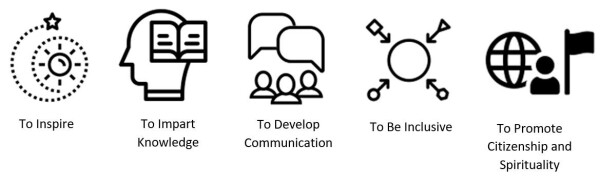
To inspire children to develop a love of music, feel confident in expressing themselves musically, and experience the joy of performing, composing, and listening.
To impart knowledge so children understand the key elements of music, including pitch, tempo, dynamics, and structure, and learn how music is created, performed, and recorded.
To develop communication so children can express ideas and emotions through music, collaborate effectively in ensembles, and share their musical interpretations confidently. Music provides opportunities for teamwork, listening, and responding, strengthening both verbal and non-verbal communication skills.
To be inclusive so that all pupils can access and enjoy music, regardless of ability or background. Lessons are designed with scaffolding and differentiation to ensure every child can participate fully, fostering a sense of belonging and achievement.
To promote citizenship and spirituality by helping children appreciate the role of music in different cultures and communities, encouraging respect, empathy, and reflection. Through music, pupils explore themes of identity, belonging, and shared human experience.
Curriculum Implementation
At St Cecilia's we use the Kapow Primary’s Music scheme which weaves together performing, listening, composing, music history, and the interrelated dimensions of music (pitch, tempo, dynamics, etc.).
Lessons are structured into five-lesson units with cross-curricular themes to engage pupils.
Pupils learn to sing expressively, play tuned and untuned instruments accurately, and use musical elements in improvisation and composition.
The scheme follows a spiral curriculum, revisiting and deepening skills year on year.
Lessons include practical activities, movement, and dance, with opportunities for independent, paired, and group work.
Teacher CPD is supported through videos and webinars to build confidence in delivering high-quality music lessons.
Curriculum Impact
The impact is monitored through formative and summative assessments, including performance opportunities at the end of units.
Pupil voice and work evidence show strong engagement, enjoyment, and retention of learning. Students use subject-specific vocabulary confidently and produce high-quality, age-appropriate work.